
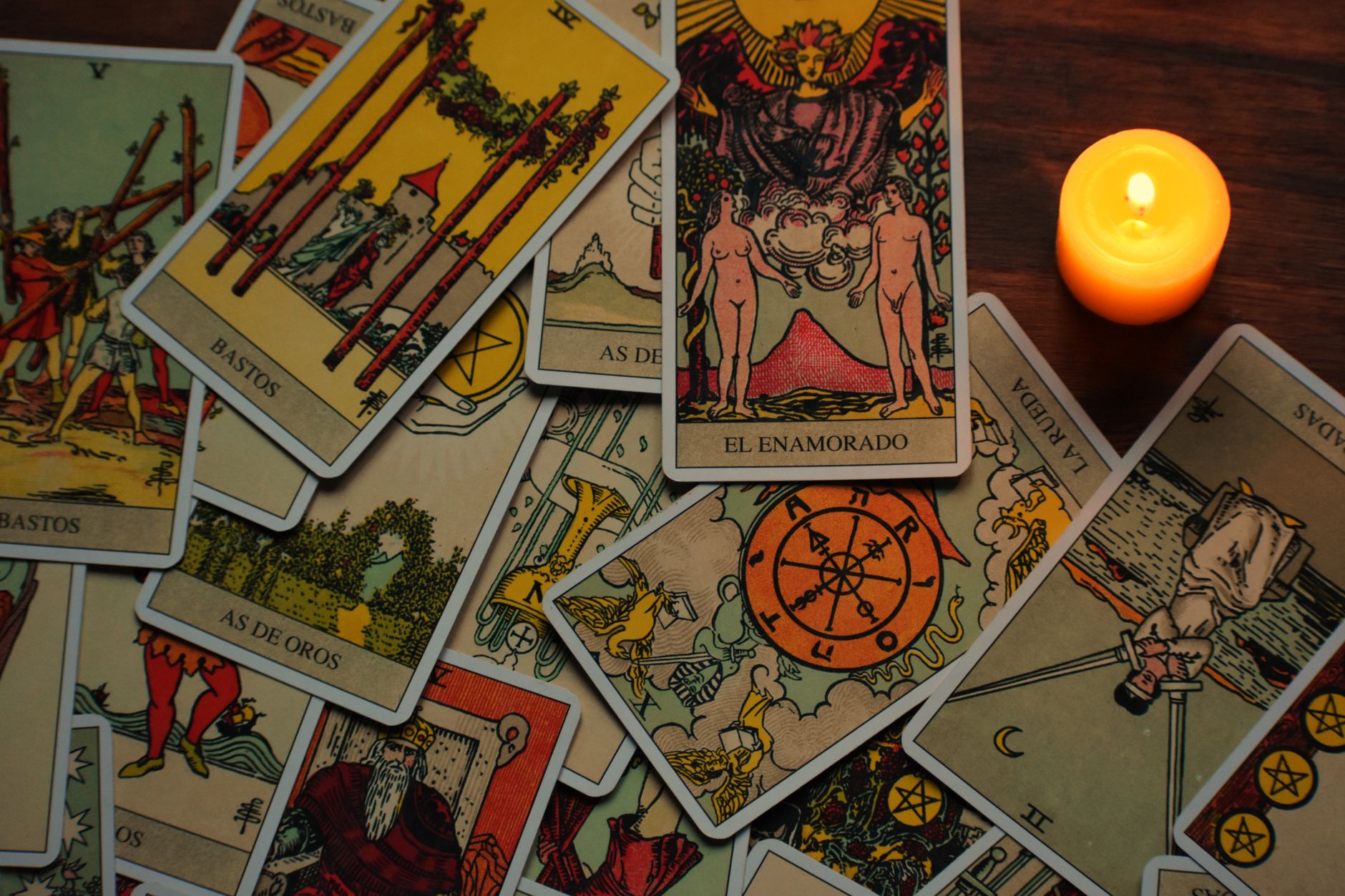
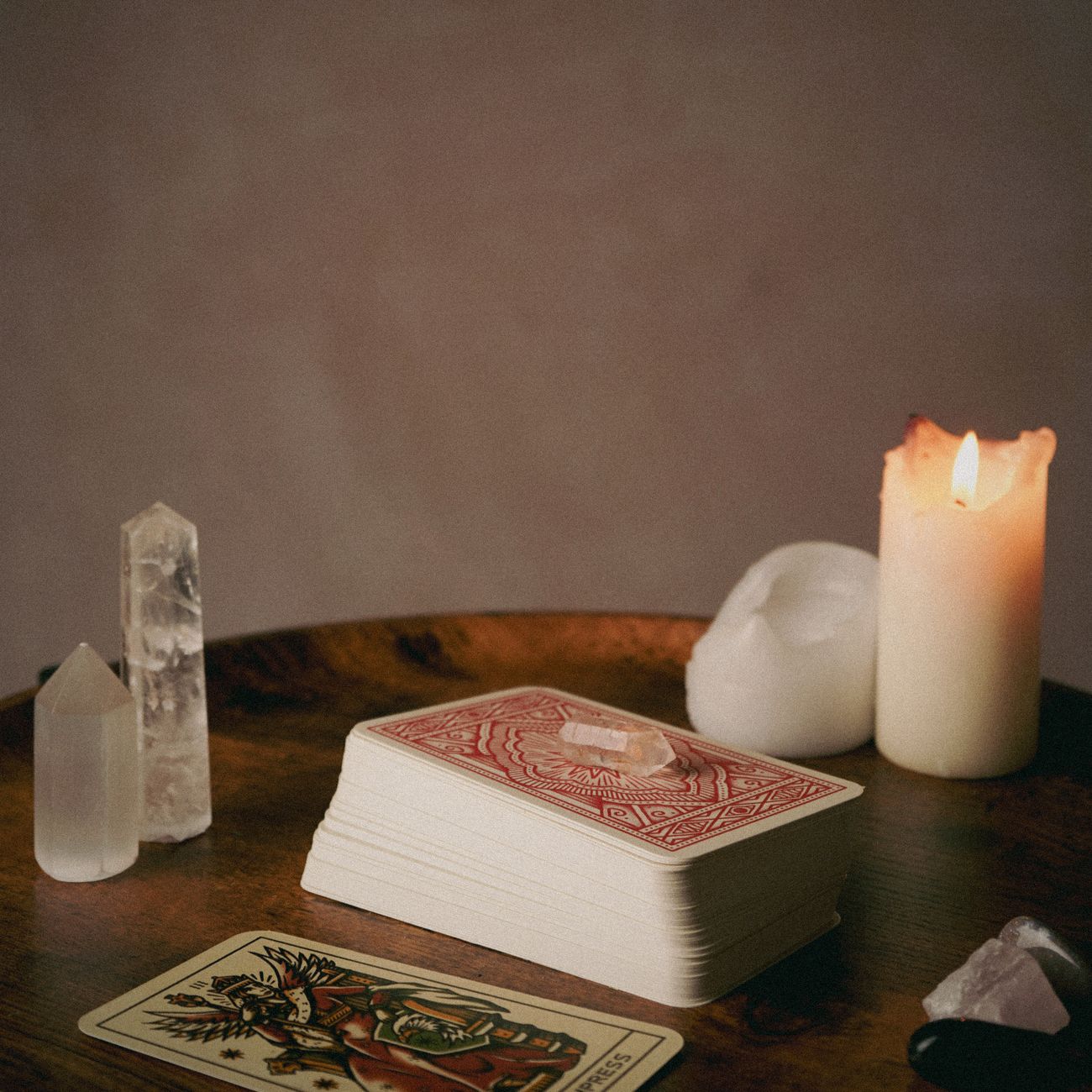
You’re scrolling through TikTok late at night when a video appears: “Pick a card. This message is meant just for you.” Three piles, a soft voice, gentle music. And somehow, you feel seen.
Tarot has gone mainstream on social media. At the same time, a counter-movement has grown: for many people of faith, it’s all the devil’s work, a doorway for dark forces.
Between those poles, a lot of people feel unsure. Is it okay to watch these videos? Is it harmless? Or is there more to it?
I won’t hand you a ready-made answer. Instead, I want to look at three perspectives: the religious, the psychological, and the societal.
Where do the cards actually come from?
Tarot has a surprisingly unglamorous origin. In 15th-century northern Italy, “tarocchi” was an ordinary card game played by the nobility. Only in the 18th century did French occultists begin to attach symbolism and fortune-telling meaning to the cards, and with the 1909 Rider-Waite deck, modern tarot got its familiar look. Divination, in other words, was a later addition rather than the cards’ original purpose.
The religious perspective: Why many Christians urge caution
Christian tradition has a clear line here: the Bible warns in several places against divination and seeking guidance from supernatural powers outside of God (Deuteronomy 18, for example).
At its core, the warning is less “cards are evil” and more a question: whom do I entrust my future to? If I look for direction in cards instead of prayer or my own conscience, my trust shifts.
People who think this way aren’t being narrow-minded; they’re acting from inner consistency. At the same time, it’s worth looking honestly at how many people use tarot not to predict the future but as a prompt for reflection.
Believers weigh that difference very differently, and that is a conversation worth having without questioning anyone’s faith or intelligence.
The psychological perspective: Why does it feel so personal?
Here it gets interesting, because psychology offers a sober explanation. The Barnum effect (or Forer effect) describes how people experience general statements as remarkably personal. As early as 1949, psychologist Bertram Forer showed that his students rated a supposedly individual personality description as highly accurate, even though they had all received exactly the same text.
Add projection: the cards themselves are ambiguous images, and you interpret them against the background of your current worries and hopes. That’s why the same card can feel entirely different to two people.
The “message” arises largely within you. That’s neither good nor bad, but it explains why tarot can work as a reflection tool for some people with no supernatural explanation required.
The societal perspective: What social media makes of it
The truly critical point, in my view, lies less with tarot itself than with the environment it now lives in.
“Pick a card” videos are mass products. A message supposedly meant “only for you” reaches thousands at once. That’s not a personal conversation; it’s a format optimized for reach.
Vulnerable moments become a business model. Someone searching “Will he come back?” at 2 a.m. is emotionally exposed. Some providers exploit that with fear of loss, urgency (“You need to see this card now”), and the promise of a private reading for a fee.
The algorithm amplifies what already occupies you. Watch one video about heartbreak and you get more. A harmless impulse can turn into a loop in which you constantly seek answers from outside.
Fear sells. Warnings like “This person is toxic for you” or “Someone wants to harm you” generate clicks, and they can genuinely damage relationships and trust.
So: devil’s work or not?
My honest answer: the question may be too big for a yes or no. People who believe divination is spiritually problematic have understandable reasons. People who use tarot as a mirror for their own thoughts often do so with good intentions.
And nearly all of us should ask how we handle the content that social media serves us.
Questions that can help:
- Whom am I handing responsibility for my decision to right now? The cards, a video, or myself?
- How do I feel after watching? Stronger and clearer, or more restless and dependent on the next message?
- Who profits? Is there a sales interest behind the “personal message”?
- Does it fit my faith and my values? Only you can answer that one.
Looking for orientation is deeply human.
What matters is where we find it: not in fear fed to us by an algorithm, but in a space where we can settle down and be honest with ourselves.
PART OF THE CIRCLE WITH HEAL YOUR MIND
Trends in emotional topics also spread faster than we can sort them out. Learn how to tell real patterns from social media buzzwords in our article on Heal your Mind: “Why Not Everyone Is One: The Line Between Real Narcissism and Trend Diagnosis.”
If you’re searching for direction right now and need a quiet place for your questions, “Therapy with God – The Journal” offers reflection questions, prayers, and small rituals to help you hear your own path.
Leave a Reply